
Check what you know
Did you know?
Best practice tips
Check what you know
Did you know?
- Speed is one of the main factors in fatal road collisions.
- Driving at inappropriate speeds is a dangerous and anti-social activity.
- When driving, a few miles per hour can mean the difference between life and death.
- According to Brake, the road safety charity, speed contributes to more than 105,000 collisions every year.
 Drivers travelling at higher speeds have less time to see and react to what is happening around them.
 Drivers who speed are more likely to be involved in collisions. They are also more likely to commit other driving violations, such as red-light running and driving too close.
 Speed/safety cameras are normally situated where there is a history of collisions caused by excessive speed.
Best practice tips
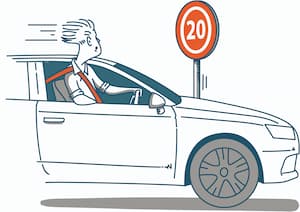
Inappropriate speed magnifies driver errors, such as driving too close or driving when tired or distracted, increasing the risk of a collision.
Learning to recognise your own ‘speed triggers’ will make it easier to avoid being ‘pushed’ into speeding. It will also make driving less stressful and more relaxing.
Top tips to stay within speed limits:
- Always be aware of and obey the speed limit of the roads you are driving on – look for signs, especially at junctions.
- Speed limits set the maximum speed for that road – they are not a target!
- Concentrate – distracted drivers speed.
- Many vehicles now have a speed limiter fitted that the driver can set to prevent accidental speeding.
- Allow plenty of time for your journey – there’s no need to speed.

Keeping a safe distance from the vehicle in front will help to reduce stress levels when driving. Leave at least a two-second gap between you and the vehicle in front. Double this distance on wet roads and increase it even further on icy roads.
Categories


This information sheet is free for employers to download and distribute to their drivers.
It may not be amended in any way | Copyright 2022 National Highways.