
Check what you know
Did you know?
Best practice tips
Check what you know
Did you know?
- Winter driving comes with extra risks. Rapidly changing weather can impact visibility and road conditions, so preparation is key.
- More than a third (34%) of drivers who have been involved in a collision or near-miss on a major road or motorway say weather played a role.
- It only takes an egg cupful of water to be sucked into an engine to ruin it.
Best practice tips
Top tips for driving in heavy rain and floods:
Driving fast through standing water is inconsiderate, can cause loss of control and can also cause serious damage to your engine.
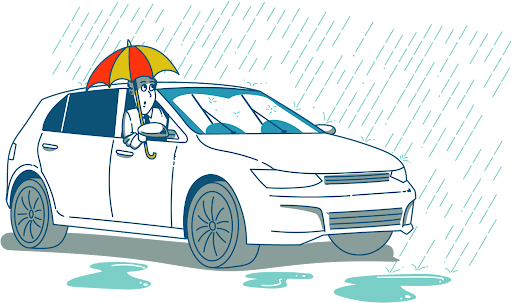
Driving fast through standing water is inconsiderate, can cause loss of control and can also cause serious damage to your engine.
- Don’t drive through flood water: there could be hidden hazards, and it may be deeper than it looks.
- If it’s time for your wipers, it’s time to slow down.
- Use dipped headlights, especially if visibility is seriously reduced.
- Give yourself more time to react – increase the gap between you and the vehicle in front to at least four seconds.
- Beware of spray from other vehicles reducing your visibility.
- Visibility affects others too, so anticipate their actions and be prepared.
Top tips for driving in strong winds:
Strong winds, either on their own or accompanying heavy rain as part of a storm, can be hazardous to road users.
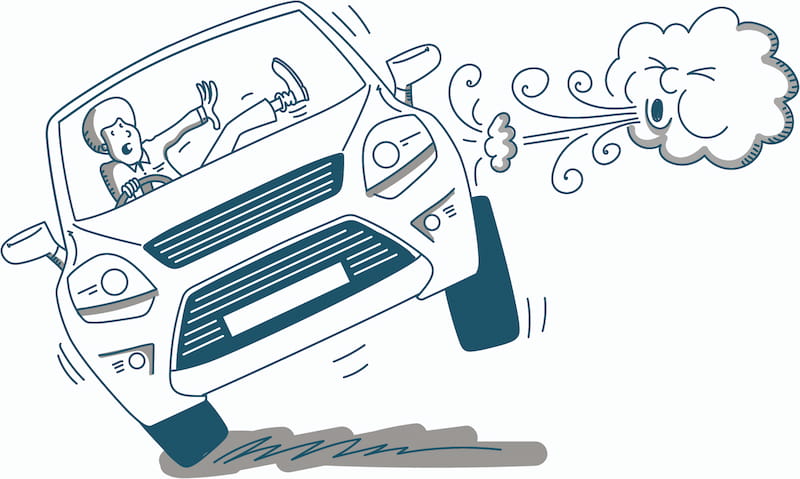
Strong winds, either on their own or accompanying heavy rain as part of a storm, can be hazardous to road users.
- Keep both hands on the steering wheel, and an eye out for debris on the road.
- Prepare for strong winds and gusts on exposed stretches of road.
- Stay focused when crossing bridges where you’re more likely to encounter side winds. Keep room on either side of your vehicle to allow for it being blown sideways.
- Leave extra room around cyclists and motorcyclists as they may veer across the road.
- Maintain a safe distance from other vehicles, especially high-sided vehicles, and caravans.
- Plan your journey carefully, checking weather and traffic bulletins regularly.
Top tips for driving in fog:
Fog is a major travel hazard which can affect visibility. It occurs most often in late autumn and towards the end of February, but can be a problem throughout spring and autumn.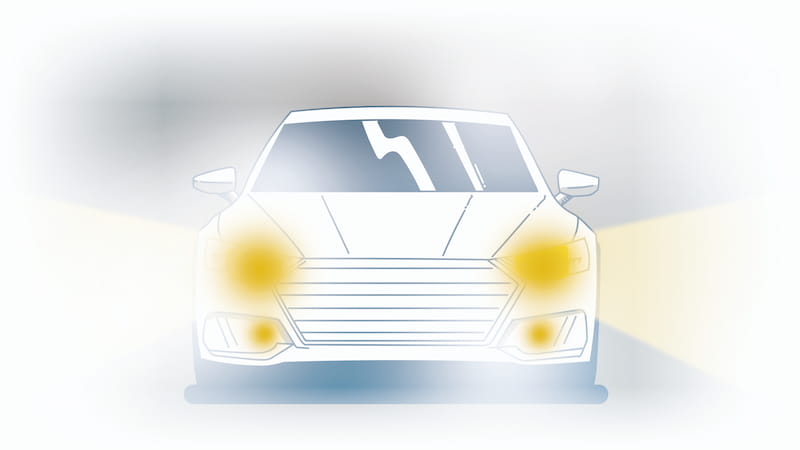
Fog is a major travel hazard which can affect visibility. It occurs most often in late autumn and towards the end of February, but can be a problem throughout spring and autumn.
- Use dipped headlights, wipers and demisters. Avoid using full beam, as the fog reflects the light back, reducing visibility even further.
- Use fog lights only when visibility is seriously reduced and below 100 metres (328 feet).
- Beware of other drivers not using headlights.
- If you can’t really see, consider stopping until it’s safe to continue.
- Only drive as fast as conditions allow.
- Create a bigger gap between you and the vehicle in front of you.
- Slow down so you can stop within the distance you can see clearly.
- Check your mirrors before you slow down. Brake slowly.
Categories


This information sheet is free for employers to download and distribute to their drivers.
It may not be amended in any way | Copyright 2022 National Highways.