
Check what you know
Did you know?
Best practice tips
Check what you know
Did you know?
- Overloading your car is an offence, punishable with a fine (usually between £100 and £300) and three points on your driving licence.
- Stopping distances could be greater for a vehicle loaded with heavy items.
- Vehicles that are overloaded use more fuel than usual.
Loads in cars can include shopping, pets, equipment, bags, samples, basically anything that isn’t a person.
Heavy loads are likely to affect a car’s handling causing it to be much less responsive.
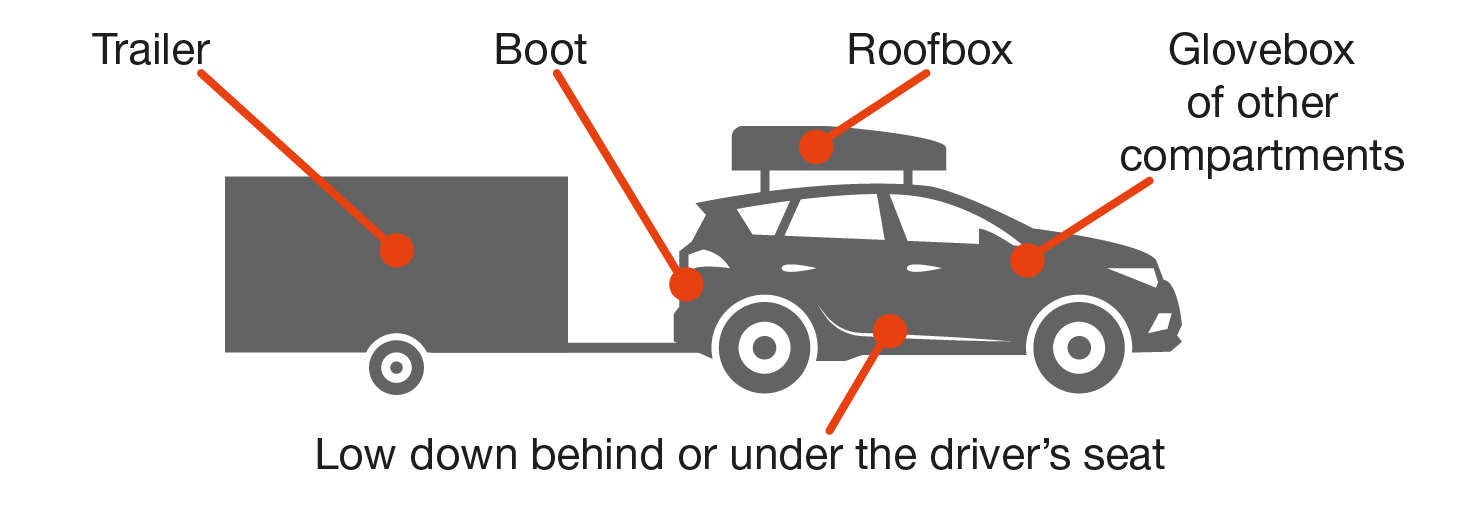
There are five places which are good to use for carrying items:
Best practice tips
- Placing heavier objects in the vehicle first helps keep the centre of gravity lower which is better for the vehicle’s handling.
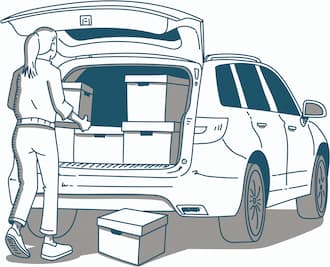
- Loose items should be safely packed away to stop any movement while cornering, preventing impact to the driver or passengers and damage to the interior of the vehicle.
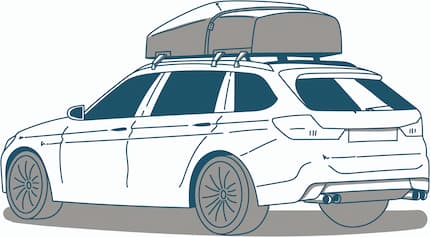
- Where space is tight, consider using a roof-rack or roof-box. These are very useful for carrying lighter but bulky items and will leave more room inside the car.
- Use anchor points fitted in the luggage compartments.
- Where possible, the parcel shelf should be kept clear.
- Don’t load items above the level of the top of the rear seats.
- If seats are folded forwards for heavy or long items, use additional restraint items so that the items don’t move forwards.
- Avoid carrying heavy items on the rear passenger seats as they will have enough force to break through the back of the seat in a frontal impact collision.
Safety reminders:
- Passengers shouldn’t be asked to carry/hold items. If the airbags deploy in a collision, the objects could be projected back towards them causing severe injuries or, if in the rear, launched forwards on impact hitting those in front of the vehicle.
- Bottles and cans (including anti-freeze) should be securely stored away to prevent them from rolling underneath the pedals.
- If the vehicle is fitted with a spare wheel, make sure it can be easily accessed.
Categories


This information sheet is free for employers to download and distribute to their drivers.
It may not be amended in any way | Copyright 2022 National Highways.