
Check what you know
Did you know?
Best practice tips
Check what you know
Did you know?
- Using your vehicle to tow could mean you need different driving licence categories
- Using your vehicle to tow could overload the your vehicle beyond its legal and / or physical capabilities

Before attempting to tow anything, check the towing capacity of your vehicle – this is the maximum weight a car can tow legally.
Trailers with a GVW of 751kg or more are required to be fitted with independent brakes.
If your load overhangs the trailer in any direction, please check the guidance on overhanging loads at the gov.uk website.
Any trailer used must be subject to the same pre-use checks as the towing vehicle. The entire load must be stable and secure.
Trailers and couplings can differ, so always follow the manufacturer’s instructions.
There is a towing speed limit of 60mph on motorways and 50mph on single carriageway roads.
Best practice tips
Make sure you know how to hitch the trailer correctly and connect the emergency brakeaway cable.

- Evenly distribute the weight of the load in the trailer.
- Make sure any load in your trailer is properly secured.
- The trailer being towed must display the same number plate as the towing vehicle.
- Ensure the nose weight of the trailer is within the manufacturers recommendations of the towing vehicle.
- Dependent on the width of the trailer, additional door or wing mirrors may be required to provide sufficient vision of following vehicles.
- If the trailer starts to swerve, slow down gently.
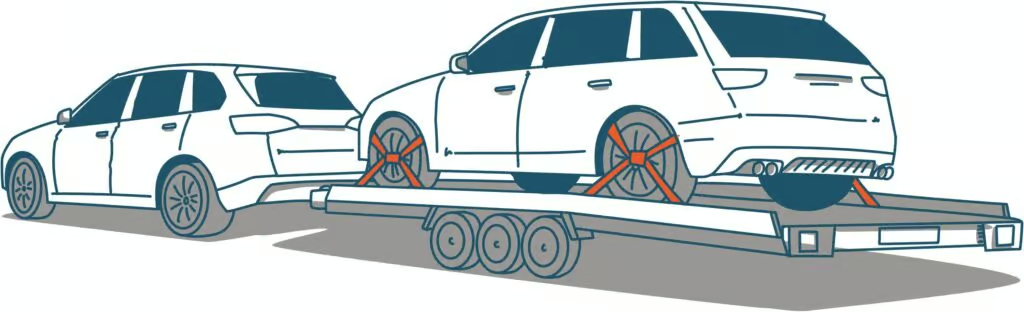
The chassis plate or sticker fixed by the manufacturer specifying the maximum weights allowed is often found on a front door sill. The weight and size of a trailer that you can tow depends on at least five key factors:
- driving licence categories
- the capability of the towing trailer
- the weight capacity of the trailer
- the brakes on the trailer
- gross weight of towing vehicle and size of trailer
Categories


This information sheet is free for employers to download and distribute to their drivers.
It may not be amended in any way | Copyright 2022 National Highways.