
Check what you know
Did you know?
More info
Check what you know
Did you know?
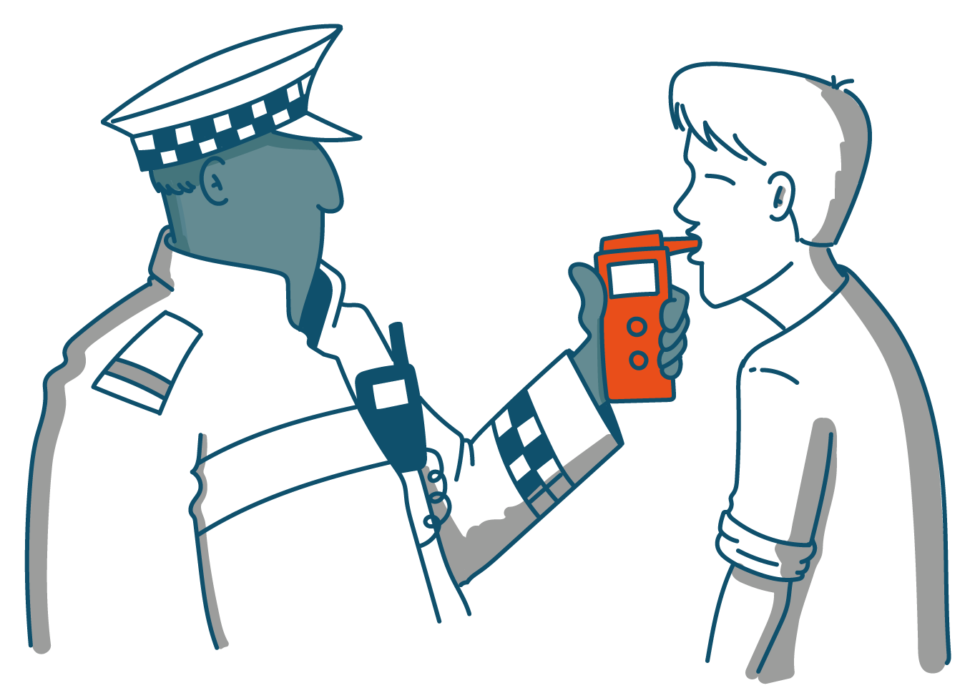
- You could be imprisoned, banned from driving and face a fine if you’re found guilty of drink-driving.
- A driver could be charged with driving while unfit even if they are not over the limit. Drivers in Great Britain convicted of causing death by careless driving when under the influence of drink or drugs face a minimum period of disqualification of five years and the maximum penalty of life imprisonment.
- The only thing that eliminates alcohol from the body is time and the average person will metabolise around one unit of alcohol per hour.
A drink driving conviction means:
A mandatory driving ban for at least one year (three years if convicted twice in 10 years)

You could be given a prison sentence and/or an unlimited fine

An offence which stays on your licence for 11 years
A conviction for drink driving also means:

A big increase in vehicle insurance.

Difficulty travelling to countries like the USA.
An employer will see the conviction on your driving licence.
More info
Around 50% of drivers who fail a roadside test are either driving for work at the time, or drive for work purposes.
The Road Traffic Act 1988 identifies that a person who, when driving or attempting to drive a mechanically propelled vehicle on a road or other public place, is unfit to drive through drink or drugs, is guilty of an offence.
The “morning after” effect means you could still be over the limit and your driving affected the next day as it takes time for alcohol to be eliminated from the bloodstream.
A good night’s sleep followed by a fry-up and strong coffee DOES NOT SPEED THIS UP!

| Max level of alcohol | England, Wales and N. Ireland | Scotland |
| Micrograms per 100 millilitres of breath | 35 | 22 |
| Milligrammes per 100 millilitres of blood | 80 | 50 |
| Milligrammes per 100 millilitres of urine | 107 | 67 |
Categories


This information sheet is free for employers to download and distribute to their drivers.
It may not be amended in any way | Copyright 2022 National Highways.